In The Flow of Time – August 14, 2025
I’m reworking the end of the novel, for good plot/narrative cause. There are several new chapters to fill in some rather massive blanks. I need you dear reader, to have better insight into what makes Santiago Paris (Marie’s first/only legal husband) tick. Because he’s a bastard.
For real he is a Haitian refugee, mixed-race, and a cabinet maker. For fiction he’s a martial artist, stick fighting (Kalinda) which taught students with sticks skills useful with machetes. That makes them very dangerous. The martial art for real was outlawed, and became a dance style with an island heritage. All that’s in the story.
So, how can I work him in? Research gives me an opportunity for local color: firefighting. The who what when where why work into the story line, so that’s good. But what was formal firefighting like in 1820? Ah, writer-boy is in his happy place, RESEARCH!
The city had fire hydrants, no shit. Benjamin Latrobe put the system together. I have a period map (of course) that locates hydrants on the various blocks of the Vieux Carré. Turns out to be quite useful to plot this chapter.
There are fire engines. I located a tome on the History of the New Orleans Fire Department from the early days… dated 1895. A bit dry, very flowery in the style of the time, but rich well of information. Not the least of which, it’s written by an Irishman, and makes no bones about how the early days didn’t attract the “class” of better people who would give the cache of respectability. No, they offered remuneration of a couple of dollars a month, so they pulled in the riffraff. The elitism present in this old volume is pretty intense.
In 1821 the city had segregated volunteer fire companies, white and “free men of color.” This is my entry into the narrative. Santiago is an FMOC, and I’m going to make him an assistant foreman for this particular fire company. That New Orleans encouraged and invited FMOCs to act as firefighters… not unique (happened about this time in Philadelphia and NYC), but decidedly unusual, especially for the deep south.

There are fire engines, hand-pumped to create pressure. There’s a gimbaled nozzle on top. You get the engine close to the fire and spray. There are no high-pressure hand-held hoses. They don’t exist.
Humans pull the engines. Horses show up circa 1830. Fire companies didn’t own horses. The city paid a reward for the first person to show up at the firehouse with a horse. There was a reward for first engine on the scene, and another if a 2nd engine/horse outpaced the first. So they paid for speed and encouraged competition. But that’s downstream. We’re talking circa 1820. Human powered pumps, human pulled engines.
Circa 1810 they had practice first Sunday of every month. The city dug two wells in Place d’Armes for the fire companies to use for practice. The hydrant system showed up later. The hydrant system is NOT high pressure. It’s essentially designed to be a ready source of water to fight fires, better than wells and closer than the river.
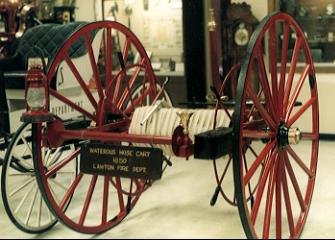
But, and this is my speculation, there must be hoses. So we have hose reels on carts, again human-pulled. The hose is the connector between the hydrant and the fire engine, not a device for actually fighting the fire. There is no suction pump, it relies on what pressure there is in the hydrant system to push water into the cylinder to get pressurized and sprayed onto the fire.
By 1820 there are fire sheds for equipment spread in each of the wards of the city. There are formal companies of firemen and sapeurs – engineers – with axes, hooks, etc. All volunteer, with some chance of reward or remuneration after the fact if you actually put out the fire.
The underpinnings of the modern New Orleans fire department date back to the 1830s, but that was a reorganization of this hodgepodge of competing, segregated volunteers racing to beat each other to a fire to claim the rewards.
So, research done, most of which will vanish and not appear at all, but the scene, the engine, Santiago’s role, the aftermath… it should all feel much more real because. And I got to learn about 1820 fire fighting in New Orleans, while holding my nose at the author’s holier-than-thou elitism about a better class of people.