Plus ça change – February 19, 2026
I’ve mentioned these in passing before, I thought it would be good to call them out for the credit they deserve.
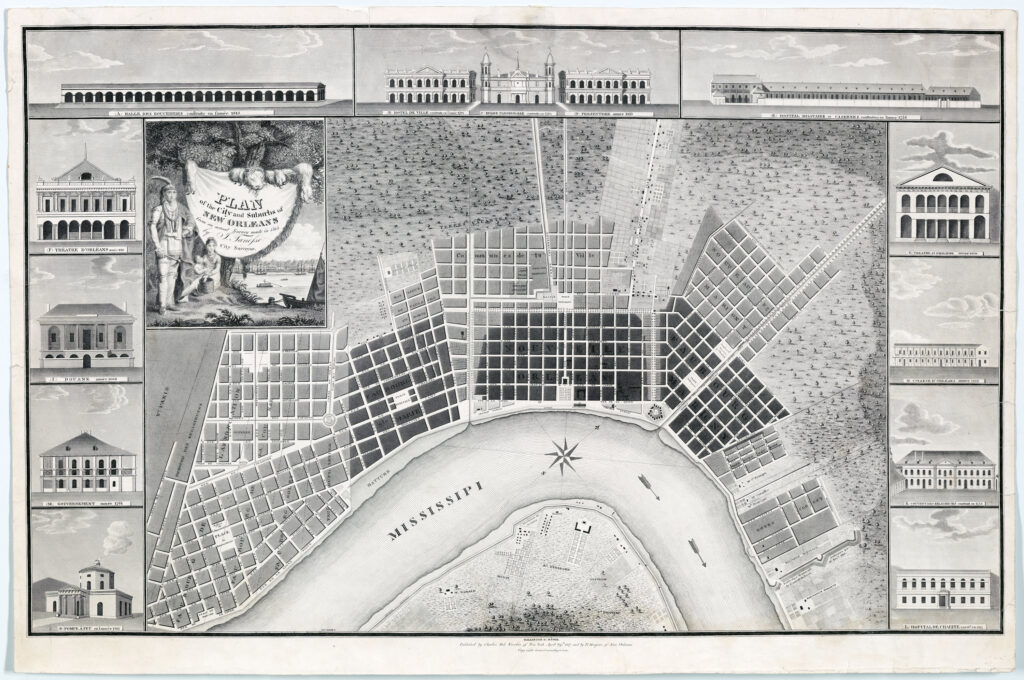
I have characters who are going to walk down Rue d’Orleans to Père Antoine’s garden. I have a pretty good map of old New Orleans in my head, but the city changes over time. It’s been a while, so I pull out the old maps of what the garden was like, where his hut was, refresh my mental image so I can describe the scene. Along the way, what do they see? I know the “French Theater” is on this road. It’s the opera house. I’ve got period images. What else?
I head into the directory for 1822 (the scene is in 1826). The directory is a census of sorts. It’s the names of people who lived on the street, and in many cases their occupation. None of this will make it into the story, probably. But, it is oddly fascinating, to me anyway.
So from 1822, I give you…
57 St Ann; HENRY, CATHERINE; trader
This is Marie Laveaux’s grandmother – this is where Marie grew up. In French, Catherine was a “marchande.” In all likelihood she sold something delicious as a street vendor. So I have her do that in the story. She might have had a booth at the market.
However, in 1842,
Laveaux Marie 179 St. Ann St.
Catherine has died, the numbering has changed, but that’s the same house.
There are hundreds and hundreds of listings. These two caught my eye on Rue d’Orleans in 1822
40 Orleans; LANCELIN, JOHN L; comedian
52 Orleans corner Burgundy; NOIRY, PIERRE; wooden riding ponys
There’s a guy who makes a living carving hobby horses. Comedian is an occupation (22 citywide). Lots of segar makers too. There are stone cutters, mariners, constables, carpenters, widows, tailors, cabinet makers, washerwomen. Sometimes the location is listed as “domicile” so I surmise there was a business elsewhere. Otherwise, there’s a fair chance that where they live is where they work.
The most common uses for these directories, for me as novelist is…
- * to come up with real names (or locations) I can use
- * to get a sense of the myriad occupations that make up a 19th century city
- * to see where my historic characters actually lived
17 St Ann; FLEURY, JOHN B.; tavern & billiard table keeper
I needed a billiard parlor. Might as well use an actual place.
122 Dauphine; PARIES, ST. YAGUE; cabinetmaker
He is known to history as Santiago Paris, or St. Jacques Paris. This is Marie’s first and only legal husband. Did they live here? Probably, it’s the only listing. Where that is modern day? That’s another problem, the numbers all changed. But I make him a cabinet maker, because he was for real.
95 Bayou below Rampart; GLAPION, MADAME; widow
This is probably Christophe Glapion’s mother, and I know from other sources that he lived with and took care of his mom. So he lived there. I know from parish records that at one point Marie and Santiago lived on this street, but I don’t know precisely where. In the mid 1820’s, Christophe became Marie’s life partner, after Paris abandoned her and then died in Baton Rouge. So I had her live across the street from Christophe, they meet as neighbors.
19 Levee; KERR, JOSIAS E.; M.D.
He’s a major character, married to one of my relatives in fact. They move around over time, and in the novels they show up where and when they really lived.
I correlate the information from the directories with data from the US census, real estate transactions in the Vieux Carré, maps…
OK, must pull myself away and actually write.
An 1815 map of old New Orleans by Tanesse.