In The Flow of Time – January 21, 2025
I find the whole process of writing to be a fascinating mental exercise, hence these posts. I do it, and while I do it I watch me do it. Sometimes I do my best writing in the shower. And I love research.
What’s up is a funeral scene. Grandma died. It was going to be a walk from the family wake (parlor) to the cemetery. I want dialog, conversation about “stuff” that matters to the narrative. I wrote it, it sucked. I was reaching, it wasn’t a natural flow. Way too much “the author wants to tell you something.” I chewed on that, went back to some period sources on what a Black funeral was like in 1817 New Orleans… and I can’t start at a wake. There’s a funeral mass in the church.
Rewrite. I start at the church, walk to the cemetery. This turns out to be a quite different scene, and it works MUCH better. Marie can walk with Charlotte, they’re both family outsiders, and they can/will talk about the stuff that matters to them. Which is the driving action in the story. 🙂 Sweet. The interaction between Marie and her younger half-sister is still a bit forced, but I’ll get back to it. When I get to the end, the burial in the cemetery… and… nope. Not working. I got nothing. Hmmm.
Walk away. It’s cold, build a fire, get in the shower… grrr… I’m washing my hair (what little remains), and simultaneously standing in a 19th century New Orleans cemetery, next to the wall by the canal, the priest, the altar boys, the vault, the many vaults are close, their ain’t room for the crowd who came to the funeral, so some of them are just walking away…
I’m immersed, as it were. I have pored over the cemetery map. I’ve picked the vault. I know the streets, the alleys, the relationship of cemetery to Congo Square, to the Carondelet canal… I can see the crowd dispersing…
AHA! The idea for the chapter’s denouement appears.
For real: 1817, funerals are not accompanied by music. By the late 1850s, they were. The guy behind that was Pierre Casanave, a free man of color, cabinet maker, and undertaker. Some sources attribute “second line” music to his funerals. He is in New Orleans in 1817, he’s one of the thousands of refugee from Ayiti (Haiti).
For fiction: I already had him as “undertaker” for funeral scenes. 1817 is a bit too early for the historical Pierre Casanave, but FICTION. Only by a handful of years. So I’m using him.
Music
The people leaving the cemetery are being musical. Research. I need… a kind of music, a song, small musical instruments, something you’d have in your pocket or in a satchel. No one is expecting to play during the procession to the cemetery, but afterwards, hey, we’re on our way home, let’s play some music as we go.
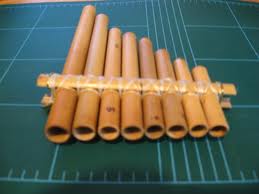
That’s what Marie hears. The instrument is the quills. The quills is a “lost” African-American woodwind instrument, a pan flute. I will invent the song, but it is a rhythm/song called the counjaille. Roustabouts sang this on the docks, and the steps match the rhythms used when unloading a sailing ship. It derives from traditional Kongo dance. It. Is. Perfect. The song, the dance, the origin, the rhythm, the instrument. It all showed up last night and this morning as I pursued the idea.
And the song? Oh My God. From an 1867 monograph titled “Slave Songs of the United States.” Most of it is about the American south, not the Creole/French south. There are a half dozen creole songs at the end. And in a footnote, I find this, specifically about Creole slaves singing counjaille songs.
“The music is furnished by an orchestra of singers, the leader of whom—a man selected both for the quality of his voice and for his skill in improvising—sustains the solo part, while the others afford him an opportunity, as they shout in chorus, for inventing some neat verse to compliment some lovely danseuse, or celebrate the deeds of some plantation hero.”
I have everything I want: improvisation, the shout out, the call and response, beautiful voices, the voice as instrument (the quills becomes an accompaniment, nothing more). A bunch of friends, pretty much an a cappella group, walking away unseen on the other side of the cemetery wall, singing the praises of the Grandmother, who is the Voudou priestess they all know. He’s making it up as they leave, and they’re having a blast. Good Night Moman! I imagine a song that is triple entendre… she’s outrageous, Good night! She’s just had great sex (that was a good night Moman). And she’s being buried. Good night, Moman. Let’s see if I can capture that in a sentence 🙂
And the undertaker Casanave hears music fading into the distance as the priest intones the final words. All of this will provide some color and authenticity to a paragraph or two. And the words, instruments, terms, get tweaked into earlier places in the story. Hopefully the story that this supports will be worthy.
For background on counjaille singing and dancing: https://pancocojams.blogspot.com/2013/11/in-search-of-information-about_2.html